LIFE IN ‘Q-TOWN’ Civilian community exists to serve the Marine Corps Base
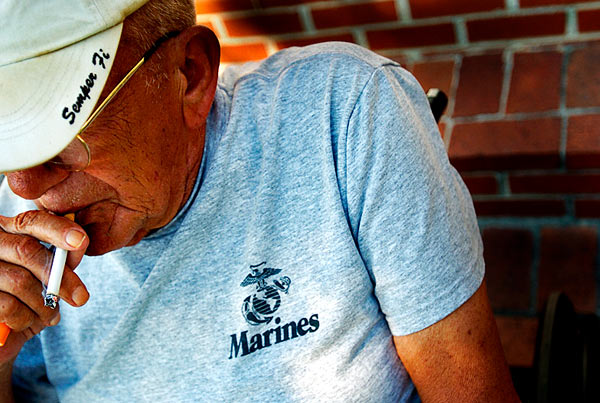
James Hill served as a Marine from 1957-1984 and has lived in Quantico for 12 years. “This is the safest place in America,” Hill said.
“I just come down here to clear my head. It’s freedom.” Quantico resident Tyson Watson said. Watson used to fish here when he was growing up and now lives in an apartment close to the water. Watson has no connections with the base, but does use the obstacle course on base to work out.
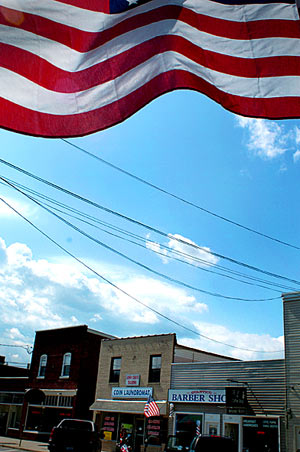
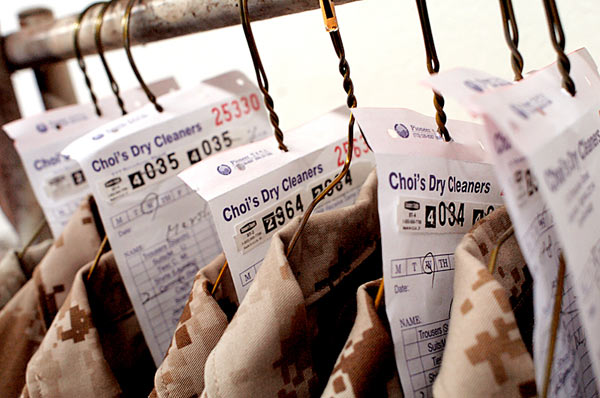
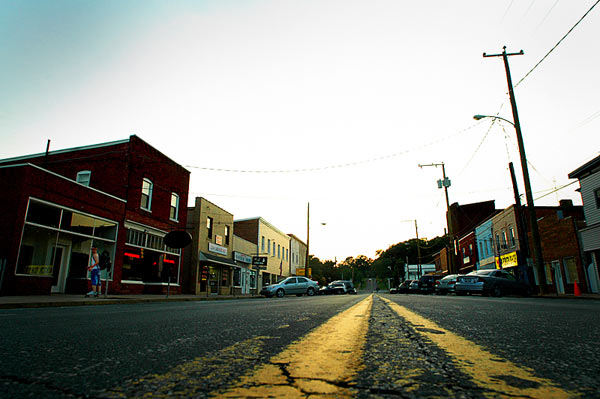
The town of Quantico has no schools, no churches and more barbershops than restaurants. The laundromats, dry cleaners, uniform shops and other businesses have been catering to the Marines since 1917, when the Corps began to lease the land next to Quantico. In 1918, the Marine Corps purchased the land.
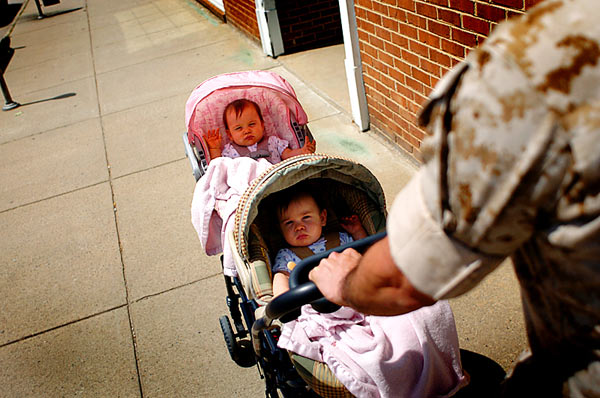
“We would love to live here,” Officer Retention Planner Cesar Nader said as he walked his eight-month old twin daughters in Quantico. Nader and his family want to buy a house in Q-town, but none are large enough for his family of seven.
The small number of “Q-Town” residents (561 as of the 2000 Census) have to pass through a security gate and drive through the base in order to get to the town. Most of the residents are former Marines or connected to the 60,000-acre Marine base in some way.
Quantico, VA. has the distinction of being the only town in the United States surrounded by a military base. The town is bordered by the Quantico Marine Corps Base on three sides, with the Potomac River forming Quantico’s fourth boundary.
BUENOS AIRES GRAFFITI 2006 ¿Es buenisimo?
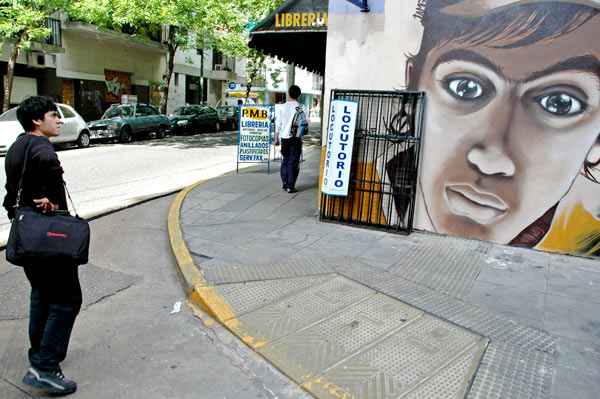
Gonzalo, the owner of an art gallery in Buenos Aires dedicated to graffiti artists and who has lived in New York, says that graffiti in Buenos Aires is quite different than in the United States. For one, the laws are not as strongly enforced in Buenos Aires and the amount of political graffiti is far greater.
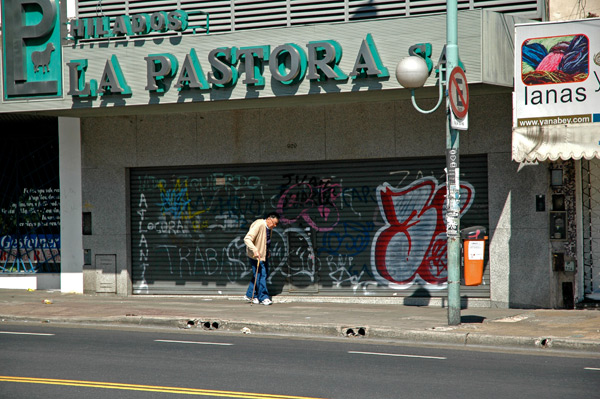
Graffiti in Buenos Aires is so prevalent that it blends into the cityscape. Jorgelina Echevarria, a journalist from the city, thinks that the popularity of graffiti has risen substantially since the economic crisis in 2001.
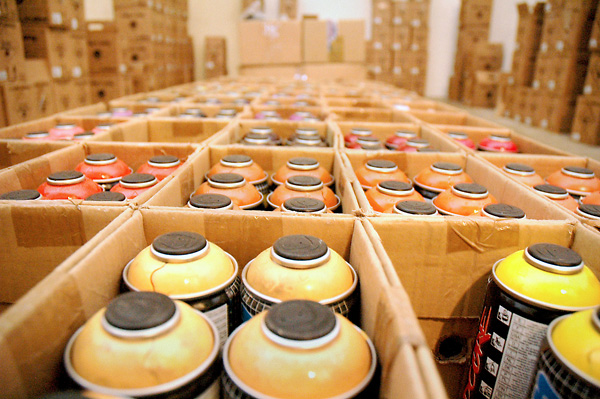
Stylo Graff, a store in the Belgrano neighborhood, sells approximately 2,500 cans of spray paint a month and also sells clothes designed by graffiti artists. In Buenos Aires, many graffiti artists use their talent to design anything from shoes to skateboards. These boxes, pictured here in a backroom at Stylo Graff, contains spray paint and spray can caps.
An artist that goes by ‘Fisek’ fills in part of his mural on the wall of an abandoned warehouse in the Villa Crespo neighborhood. Fisek and his friends gather about once a week to paint different walls in the city, with the permission of the owners.
Adolfo E. Soto admires the work of a graffiti artist. “Es buenismo” said Soto of the mural. Photo taken in the Recoleta neighborhood.
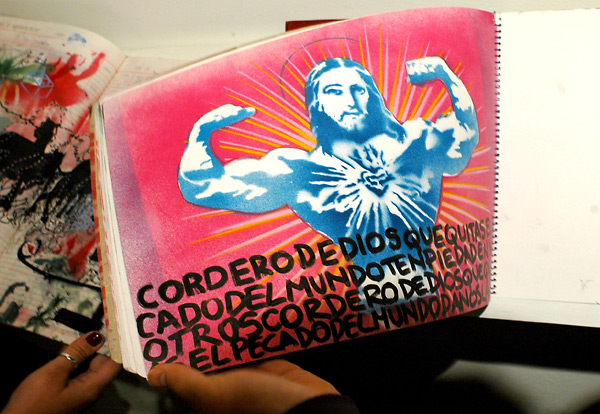
Patrons are encouraged to look through graffiti notebooks on display at the Post Street Art Gallery in Palermo. The books were submitted by various graffiti artists and make up the gallery’s ‘Tapa Dura’ collection.
In 2005, the Minister of Public Space in Buenos Aires, Lia Maria, enacted a new policy to clean up the parks, fountains and plazas of the city. Carlos Carabajal (pictured here painting in the Congressional Plaza) works for the city painting over graffiti. The Congressional Plaza was one of 43 plazas chosen by the city that needed the most attention.
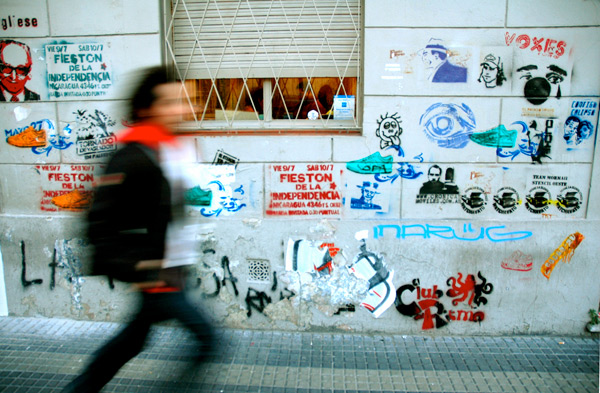
The graffiti of Argentina ranges from simple political messages to intricate murals. Some of these stencils depict political figures and others announce club parties. Stencil graffiti is much more popular in Buenos Aires than other large, South American cities such as Rio De Janiero and Santiago. Photo taken in Palermo Viejo.
ROOTS HOMESCHOOL(2007) A Self-Directed Learned Community





 Christopher Wehling | Chris Wehling